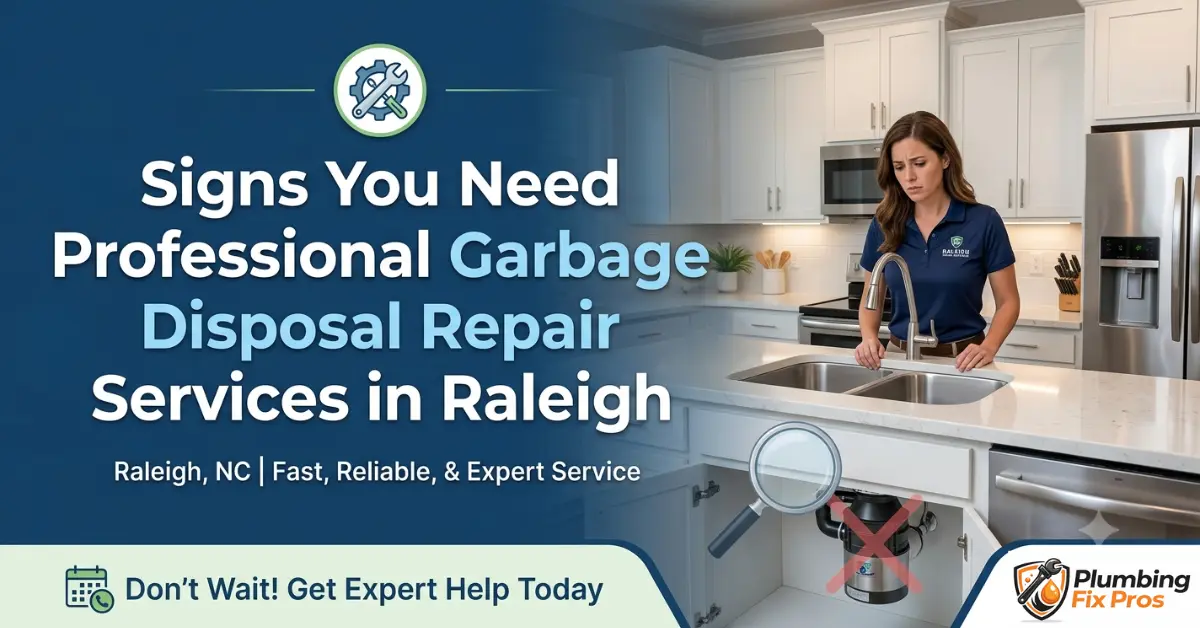
Your garbage disposal seemed totally okay yesterday, and now when you flip the switch it just gives this dull hum. You shut it off, wait a second, try again, and it does the same thing. A lot of people in that scenario just keep flipping the switch, like something is going to magically shift on its own, but honestly, that’s about the worst idea when the disposal is jammed.
Garbage disposal repair problems follow patterns that are almost always predictable once someone who knows these units looks at what’s actually happening. This blog is about those patterns, what proper repair looks like, and how to know when repair makes sense versus when replacement is the smarter outcome.
What Is Your Disposal Telling You?
Garbage disposals don’t fail quietly. They give you signals for days or weeks before something fully stops working. The problem is the signals look different depending on what’s actually wrong, and most homeowners treat all of them the same way.
A hum without grinding means a jam. Something hard got into the grinding chamber, and the plate can’t rotate past it. This is almost never a serious repair when it gets handled quickly and almost always a more serious situation when the motor gets run repeatedly against the jam until something burns out.
Water under the sink means a leak. Disposals leak from three different spots and each one has a different cause. A leak at the top where the unit meets the sink drain means the sink flange seal has failed. A leak at the side where the discharge pipe attaches means that connection has loosened or the gasket is gone. A leak from the bottom of the unit itself means an internal seal has cracked, and on a unit older than eight years, that conversation almost always leads to replacement rather than repair.
A disposal that turns on, runs, and drains but leaves standing water in the sink has a clog problem downstream from the unit, not inside it. Running the disposal harder doesn’t fix a drain line clog. It just pushes the blockage tighter.
What Are the Signs You Need Drain Cleaning Services?
Your drains tell you something is wrong before they stop working completely. Here’s what to watch for.
- Drains slower every single week
- Every drain runs slow together
- Toilet gurgles when sink drains
- Shower backs up when flushing
- Sewage smell from the drains
- Same drain cleared twice already
- Water just sits there draining
Any of these mean clogged drain cleaning services are the right call, not another bottle of something from the hardware store.
What Does Proper Garbage Disposal Repair Include?
Here is the difference between a plumber who diagnoses correctly and one who just tries things until something works.
Full Diagnosis First
Before any tool goes under the sink, the unit gets assessed properly. Age of the disposal, what symptoms it’s showing, whether this is the first problem or part of a pattern. A plumber for garbage disposal repair who skips the assessment and goes straight to clearing a jam without checking whether the motor sustained damage from being run while jammed is doing half the job.
Right Fix Chosen
Different problems need different approaches. A jam gets cleared with the right tool, not a hand in the drain. A leak at the flange gets reseated or resealed depending on the cause. A drain clog past the disposal gets addressed in the drain line, not the unit itself. Matching the fix to the actual problem is what makes a repair garbage disposal call hold up.
Tested Before Leaving
Every repair gets tested before the plumber leaves. Water runs through, the disposal runs through a full cycle, and the drain line underneath gets checked for any drips or new problems that showed up during the repair. This is the step that gets skipped on rushed jobs and it’s the reason some disposals need to be looked at again two weeks after a repair.
Repair or Replace: How Do You Know Which One?
This question comes up on almost every garbage disposal repair Raleigh NC call. The honest answer depends on two things, what’s wrong with the unit and how old it is.
A jam on a unit that’s three years old is a repair. A jammed unit that’s also leaking from the bottom and nine years old is a replacement conversation. The individual repair might work for a few months but an aging unit that’s showing multiple problems at the same time is at the end of its useful life regardless of what gets fixed this week.
A good plumber for garbage disposal repair gives you a straight answer about which situation you’re in before any work starts. You should know going in whether the money spent on repair makes sense for the age and condition of the unit or whether putting it toward a replacement is the smarter outcome.
Can You Actually Fix a Garbage Disposal Yourself?
How to repair garbage disposal problems yourself is possible in limited situations. Pressing the reset button on the bottom of the unit when it goes completely unresponsive is the first thing to try and it’s something any homeowner can do. Using the hex wrench socket on the bottom of the unit to manually rotate the grinding plate and free a jam is also something a lot of homeowners handle successfully without calling anyone.
Beyond those two things, the risks go up significantly. Clearing jams by reaching into the drain is not something to attempt regardless of whether the power is off. The grinding blades are sharp and the position is awkward enough that accidents happen easily. Electrical issues inside the unit and leaks that involve the drain connection under the sink are both situations where calling for garbage disposal repair services near me is the right call rather than guessing at the cause.
What About Commercial Garbage Disposal Repair?
Commercial garbage disposal repair is a different category of work from fixing a residential unit under a kitchen sink. Commercial disposals handle dramatically more volume than any home unit, run for longer continuous periods, and have components sized for that level of use.
A restaurant disposal that’s leaking or jammed during service is a real operational problem, not just an inconvenience. General electric garbage disposal repair and other commercial brands require familiarity with the specific components involved, which differ significantly from residential equipment. A plumber who handles primarily residential disposals may not have the parts or the experience to handle a commercial unit effectively.
FAQs
Conclusion
A garbage disposal that’s humming without spinning, leaking under the sink, or refusing to turn on isn’t going to sort itself out. Garbage disposal repair done correctly means finding the actual cause before deciding on the fix, using the right approach for that specific problem, and testing everything before calling the job done. Raleigh homeowners who get that handled properly stop seeing the same disposal problem show up again and again.
Disposal Giving You Trouble in Raleigh?
Stop working around a disposal that won’t cooperate. Contact Raleigh Plumbers today for garbage disposal repair in Raleigh, NC, and let’s figure out what’s actually wrong before it becomes a bigger problem than it needs to be.