A damaged sewer line used to mean one thing for a homeowner: a crew showing up with heavy equipment, days of digging, and a yard that looked like a construction site when it was all over. The pipe got fixed, but everything above it paid the price.
Pipe-bursting sewer line replacement gave homeowners a completely different path forward. The old pipe gets destroyed and replaced in the same operation, and the yard above it barely gets touched. It sounds like a simple idea, but the engineering behind it changed how sewer replacement gets done across the entire industry.
For Raleigh homeowners dealing with a sewer drain pipe that has failed beyond repair, understanding this method before calling a plumber makes every conversation more productive. Knowing what the process involves, when it applies, and what drives the cost puts the homeowner in a far better position to make the right decision.
How the Pipe Bursting Replacement Process Works
Camera Inspection First
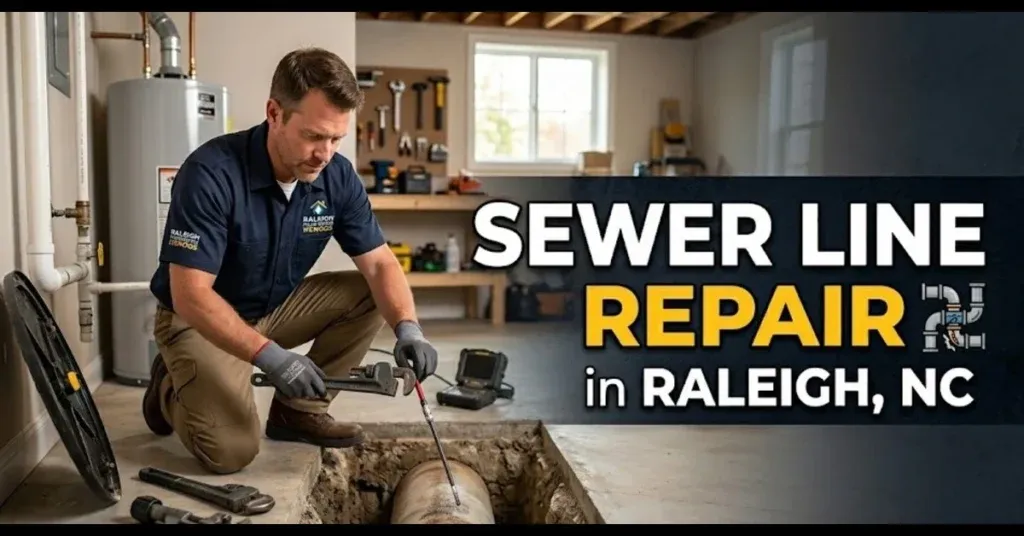
The process starts underground before any equipment gets set up on the surface. A camera goes into the sewer line first through a cleanout access point. The plumber watches the footage and maps every problem area, the locations where the pipe has cracked, corroded, separated at joints, or deteriorated past the point where any repair method makes sense.
Checking the Pipe Path
That camera inspection also confirms whether the pipe path is clear enough for the bursting head to travel through. A pipe that still runs along its original path, even if it is severely damaged, qualifies for this method. A pipe that has fully collapsed and lost its tunnel shape requires a different approach.
Digging the Access Holes
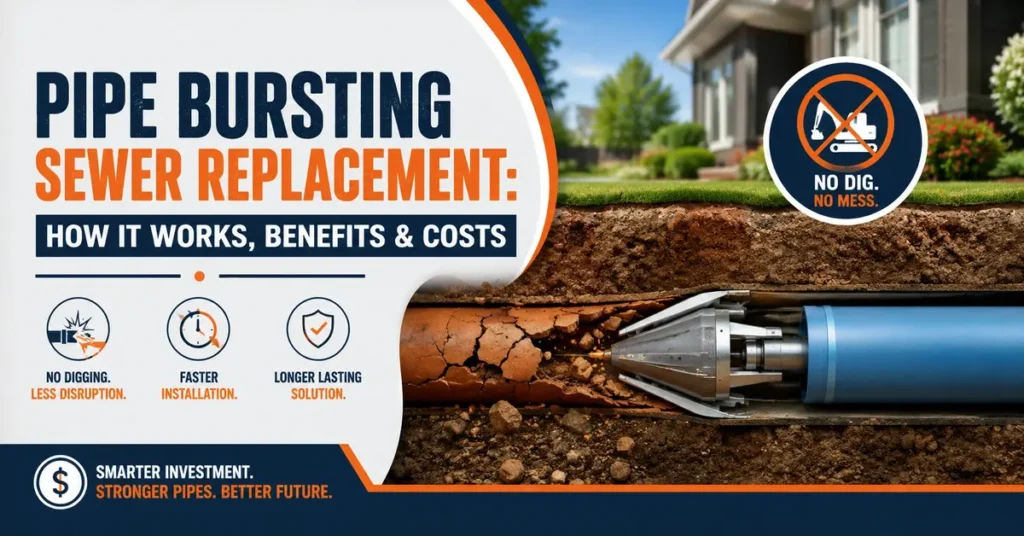
Once the inspection clears the line for pipe bursting, the crew digs two small access holes, one at the entry point where the equipment enters and one at the exit point where the new pipe emerges. These two holes are the only digging the entire job requires.
Running the Bursting Head
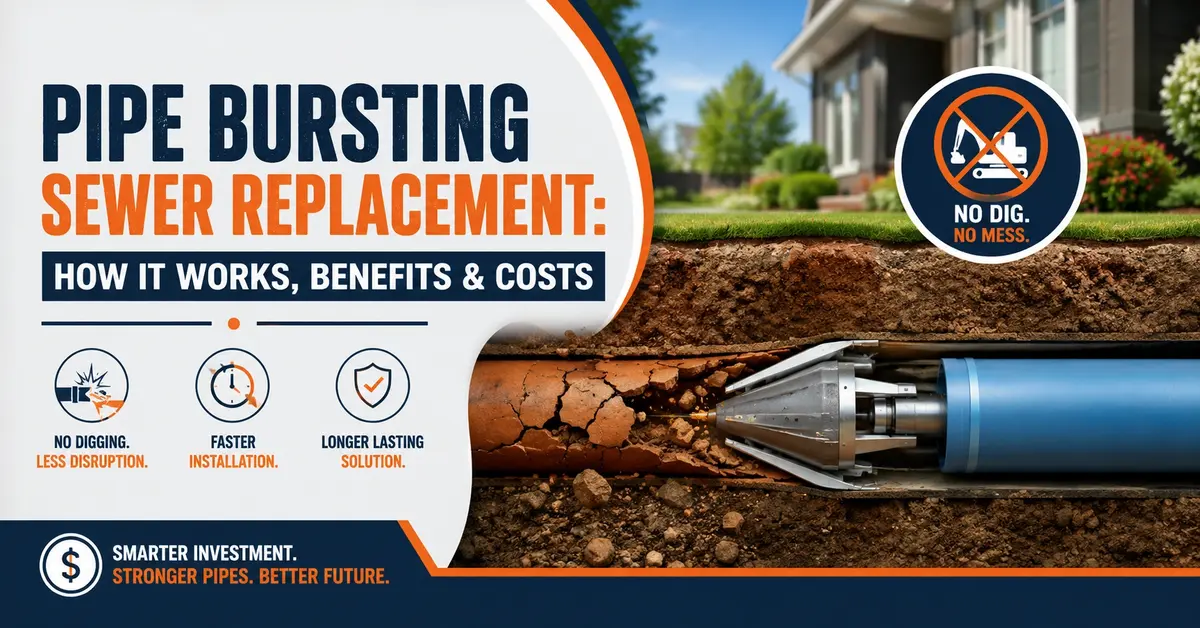
A steel bursting head gets attached to a cable that runs through the existing pipe. New HDPE pipe sections connect behind the bursting head on the cable. The machine pulls the cable and bursting head through the old pipe from the exit hole end. As the bursting head travels through the line, it fractures the old pipe outward in all directions into the surrounding soil. The new pipe follows directly behind it, pulled into the exact same position the old pipe occupied.
Completing the Installation
When the bursting head reaches the exit hole, the new sewer line is fully in place. The two access holes get filled, and the surface above the pipe path shows nothing more than two small restoration spots.
When Pipe Bursting Is the Right Replacement Option
Pipe bursting fits a specific set of pipe conditions that make other methods unsuitable. A sewer pipe that has deteriorated so thoroughly that sewer pipe lining cannot bond to the interior surface becomes a candidate. When cracking runs the full length of a pipe section rather than sitting at isolated spots, lining patches individual damage, but bursting replaces the entire run at once.
Cast iron pipes that have corroded from the inside to the point where the wall thickness has been compromised respond well to this method. The old pipe fractures cleanly outward because corrosion has already weakened it, and the new HDPE pipe replaces it with a material that handles ground movement, moisture, and root pressure far better than the original ever did.
Homeowners with mature trees growing near or over the sewer line path get particular value from this method. The new HDPE pipe has fused joints rather than the separate sections with connecting rings that older pipes use. Root systems cannot find entry points at joints that do not exist as gaps in the pipe wall.
Key Benefits of Pipe Bursting Sewer Replacement
- Full pipe replacement happens without opening the yard.
- New HDPE pipe outlasts the original cast iron significantly.
- Fused joints eliminate future root entry points.
- Two access holes replace a full excavation trench.
- Landscaping and hardscaping above the pipe stays protected.
- Sewer service returns faster than traditional replacement allows.
- Ground settlement risk drops without large trench excavation.
Pipe Bursting vs Sewer Pipe Lining
Both methods fall under trenchless sewer repair, and both fix damaged underground pipes without digging a trench. The difference between them matters a great deal depending on what the camera finds inside the pipe.
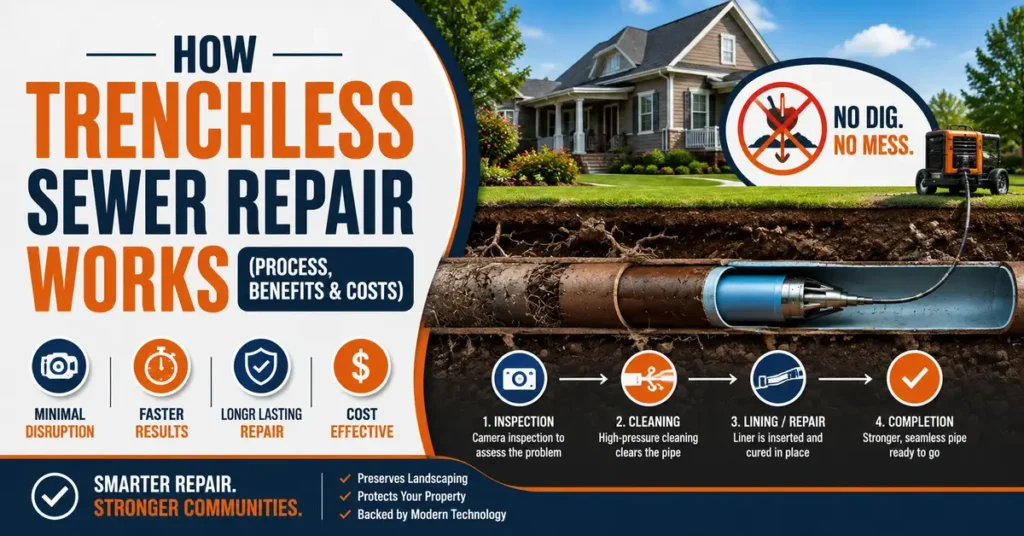
Sewer pipe lining works by creating a new surface inside the existing pipe. The old pipe stays in the ground and becomes the outer shell. The liner bonds to the interior walls and carries all future flow through its smooth epoxy surface. This method suits pipes that are damaged but still structurally present enough to hold a liner in place against the walls during the curing process.
Pipe bursting removes the old pipe entirely. Nothing from the old pipe carries any future load; it gets fractured into the soil, and the new pipe replaces it completely. This method suits pipes that have deteriorated too severely for a liner to work with, or pipes where the damage is too widespread for lining to address the full problem in a single pass.
The two methods are not competing options for the same situation. They serve different levels of pipe damage. A thorough camera inspection identifies which one the actual condition of the pipe calls for, rather than which one the plumber prefers to sell.
Pipe Bursting vs Traditional Sewer Line Replacement
Traditional sewer line replacement opens the full path above the pipe from one end to the other. Every inch of ground above the damaged run gets excavated. Driveways get cut. Landscaping gets removed. Pool decks and patios over the pipe path present serious access challenges. The restoration work after the pipe gets replaced sometimes costs as much as the sewer repair itself.
Pipe bursting achieves the same result, full sewer pipe repair and replacement with new pipe , through two small holes rather than a continuous trench. The pipe path above never gets disturbed. The same driveway that sat over the old pipe still sits intact over the new one when the job ends.
Traditional excavation still applies in situations where the pipe has fully collapsed or where the path has obstacles that the bursting equipment cannot navigate. A plumber who recommends excavation after a camera inspection has a specific reason for it. A plumber who recommends excavation without inspecting first does not.
What Affects Pipe Bursting Sewer Replacement Costs
The length of pipe being replaced drives more of the total cost than any other single factor. A longer run requires more new pipe material, more cable, and more operating time for the equipment on site. A short section costs proportionally less than a run covering the full distance from the house to the street connection.
Pipe diameter changes material and equipment requirements. Larger diameter pipes use heavier bursting heads and more substantial new pipe sections. The equipment needed for a commercial-grade main line differs from what a standard residential sewer line requires.
Soil conditions underground affect how cleanly the old pipe fractures during the bursting process. Soil that is dense or that contains rock formations slows the operation and adds labor time to the job. Raleigh’s generally sandy soil tends to work in favor of this method because the fractured pipe material displaces into the surrounding soil without significant resistance.
The accessibility of the two entry and exit points affects labor time on every job. A cleanout that sits in an open yard with easy equipment access moves faster than one located in a tight space or partially covered by a structure. Permit requirements for work connecting to the city main add to the project scope, and a licensed plumber manages that process as part of the job.
How to Prepare for a Pipe Bursting Project
Water use in the home stops for the duration of the job. The sewer line needs to be completely clear of flow while the bursting head travels through it and while the new pipe gets positioned. Our Raleigh’s plumber confirms the exact shutdown window before work begins so the household can make arrangements.
Clearing the area around both access points gives the crew room to set up equipment and work efficiently. Vehicles parked over or near the pipe path should move for the day. Any surface items sitting directly above the sewer line path, planters, outdoor furniture, decorative stones, get moved beforehand so nothing interferes with locating the line or working near the access points.
Knowing where the main water shutoff valve is located in the home saves time if the plumber needs to confirm the water is fully off before starting. Most plumbers walk through this with the homeowner before the job begins, but having that information ready keeps the process moving without delays.
Frequently Asked Questions
Most residential pipe bursting jobs are completed in one to two days from start to finish. The camera inspection, equipment setup, bursting operation, and final camera check all happen within that window for standard residential runs.
This is one of the strongest advantages the method carries. The pipe path under a concrete surface never needs to be opened. The bursting operation happens entirely underground through the two access holes at each end of the run. The concrete surface above stays completely intact throughout the job and after it.
HDPE pipe installed through pipe bursting carries a functional lifespan measured in decades. The material itself does not corrode, does not develop the internal roughness that cast iron develops over time, and handles the ground conditions in Miami's soil environment without the degradation that affected the original pipe. A properly completed installation does not require revisiting for a very long time.
A fully collapsed pipe section presents a real obstacle for this method. The bursting head needs a path to travel through the existing pipe. When that path has closed entirely because the pipe has caved in on itself, the equipment has nowhere to go. Those situations typically require targeted excavation at the collapsed section before the rest of the run can be addressed through bursting or lining.
Final Thoughts
Pipe bursting changed what homeowners have to accept when a sewer line fails. Full replacement no longer automatically means weeks of disruption, destroyed landscaping, and a property that looks worse after the repair than before it. The method delivers the same outcome, a brand new sewer drain pipe running the full length of the damaged section, through a process that leaves the surface above largely untouched.
Raleigh homeowners sitting on aging cast iron pipes with years of corrosion and root damage have a replacement path available that did not exist for the previous generation of homeowners dealing with the same problem. The key is starting with an honest camera inspection from a local plumber who assesses the actual pipe condition before recommending a method. What the camera finds inside the pipe determines what the right repair or replacement approach looks like, and for a large percentage of severely damaged Raleigh sewer lines, pipe bursting is exactly that approach.