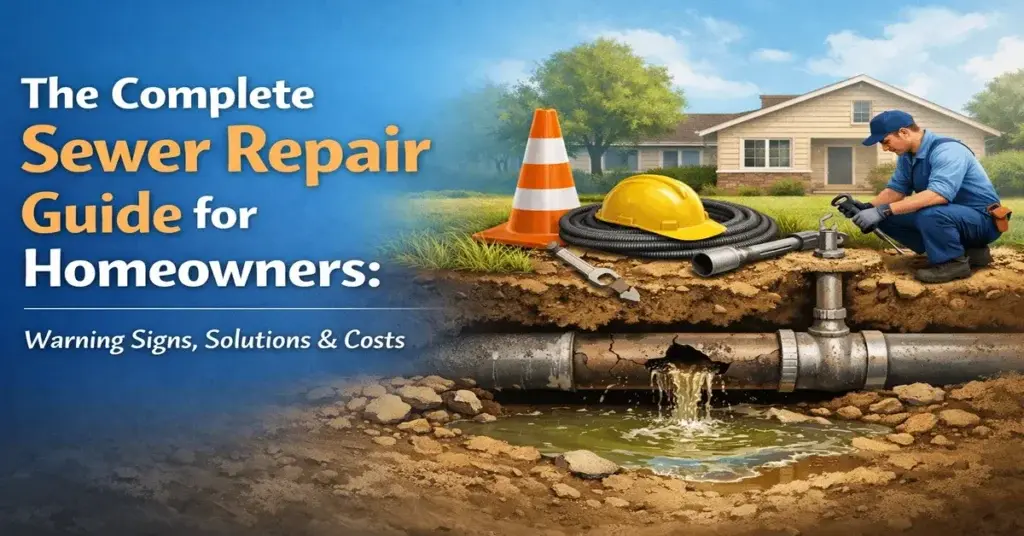
Most homeowners never think about their sewer line. It sits underground, moves waste out of the house, and asks for nothing in return, until it does.
When a sewer drain pipe starts failing, the signs are easy to brush off at first. A smell that comes and goes. A toilet that takes a little longer to clear than it used to. These things may seem small, but they are not.
Raleigh homeowners face this faster than most. The hard water here leaves mineral deposits inside pipes every single day. The tree coverage is aggressive, and those root systems find sewer lines like they were designed to. Many Raleigh homes still run on cast-iron pipes that are 40 or 50 years old. All of that adds up underground without anyone seeing it happen.
This guide walks through everything: the warning signs, what causes the damage, how plumbers find it, how it gets fixed, and what it costs.
Warning Signs of Sewer Trouble
Drains Running Slow Everywhere
A single slow drain creates a complete blockage. The main sewer line, which connects all the smaller pipes, becomes the actual problem when two or three drains operate at reduced speed. An experienced plumber begins his investigation by examining this particular pattern.
Gurgling Sounds After Using Fixtures
The gurgling toilet, which happens after the sink is empty and the washing machine creates sounds through its floor drain, produces noise because blocked air has to move back through the plumbing system. The main line system experiences a blockage, which prevents regular flow, while the trapped air has no alternate route to escape.
Smells Coming Through Drains
A sealed sewer line has complete odor control because it produces no detectable smells. The system operates the opposite way. Sewage odor through a drain opening or in a specific area of the yard indicates that a pipe has suffered underground damage, which causes gas to escape from the house.
Green Patches or Wet Spots in the Yard
Sewage leaking underground acts like fertilizer. A strip of grass growing noticeably thicker or greener than the lawn around it, especially along a straight path across the yard, often sits directly above a leaking sewer pipe. Wet spots that appear without any rain tell the same story.
Sewage Coming Back Into the Home
This one does not wait. When sewage backs up into a bathtub or floor drain after flushing a toilet, the main sewer line is either completely blocked or badly damaged. That situation needs a plumber the same day, not the next morning
Common Causes of Sewer Damage
Tree Root Intrusion
Roots follow the smallest trace of moisture underground for years until they find an opening at a pipe joint. Once inside, they grow and branch until the flow gets strangled completely. In Raleigh, ficus and banyan roots are particularly aggressive. This is the most common cause of sewer pipe repair calls across Raleigh-Dade.
Years of Grease Buildup
Cooking grease seems harmless when going down the drain. It flows warm and liquid, and then it cools against the pipe walls twenty feet down the line and sticks. Every pour adds another layer. Over the years, that buildup narrows the pipe significantly and catches every piece of debris that comes through after it.
Ground Movement and Shifting Soil
Raleigh’s soil moves. Heavy rain, drought, and the naturally high water table all shift the ground around buried pipes. When soil moves, pipes move with it. In serious cases, the pipe cracks under the pressure of the surrounding soil, pushing unevenly against it.
Old Pipe Materials
Cast iron and clay pipes both have lifespans. Cast iron corrodes from the inside and develops a rough surface that grabs debris. Clay pipes crack under root pressure and shift easily in unstable soil. A pipe that has been in the ground since the 1970s has already outlasted its designed service life.
How Sewer Problems Are Diagnosed
Camera Inspection
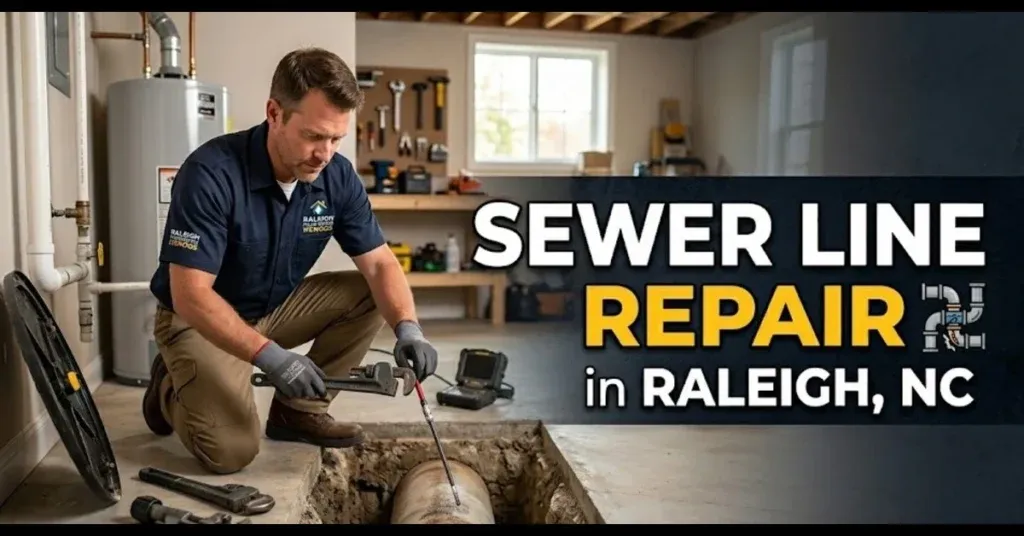
A waterproof camera gets fed into the sewer line through a cleanout access point. The plumber watches live footage on a monitor at the surface. The camera shows exactly what is inside: grease coating, root growth, cracks, separated joints, and collapsed sections. Nothing gets assumed. Everything gets documented on video before any repair decision is made.
Pipe Locating
After the camera finds a problem area, a locating device pinpoints the exact spot underground. The plumber marks the surface above it. This makes sure any excavation or repair goes to the right place rather than opening the wrong section of the yard.
Sewer Repair Methods Explained
Hydro Jetting
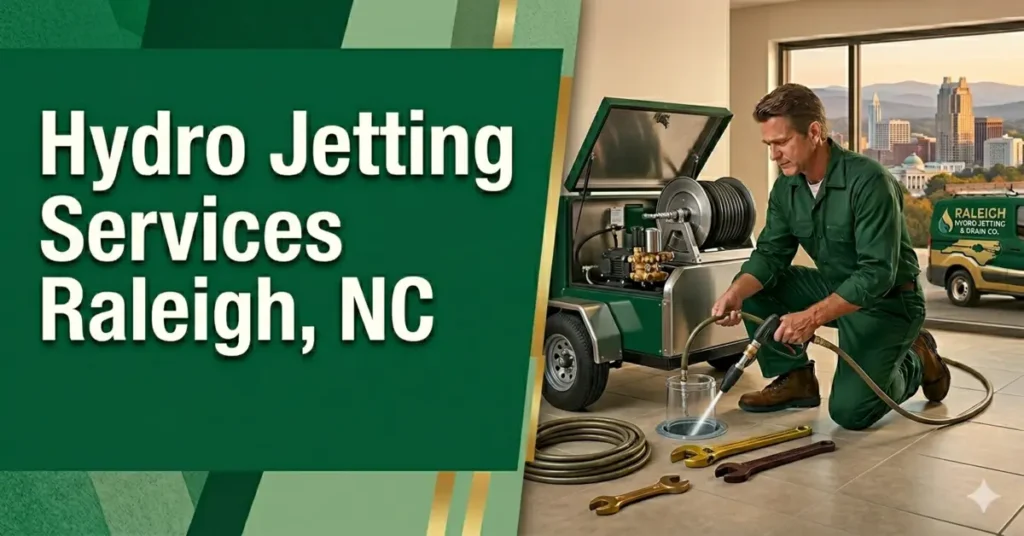
The sewer line receives high-pressure water, which ranges from 3000 PSI to 4000 PSI, through a specialized nozzle. Hydro jetting operates effectively on pipes that maintain their original structural integrity. The system provides complete cleaning, which goes beyond creating a pathway through the center of a blockage.
Sewer Pipe Lining
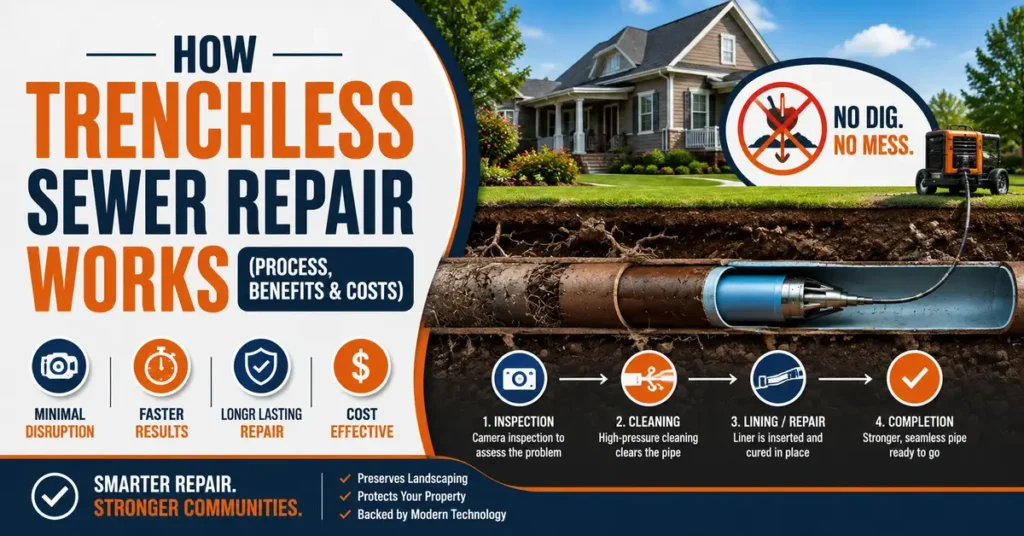
Sewer pipe lining fixes cracks and damaged sections without any digging. A resin-coated liner gets inserted into the damaged pipe and pressed against the interior walls. The resin cures and hardens into a smooth new surface inside the old pipe. This method works well on pipes with cracks or minor joint separation that still hold their basic shape underground.
Trenchless Sewer Repair
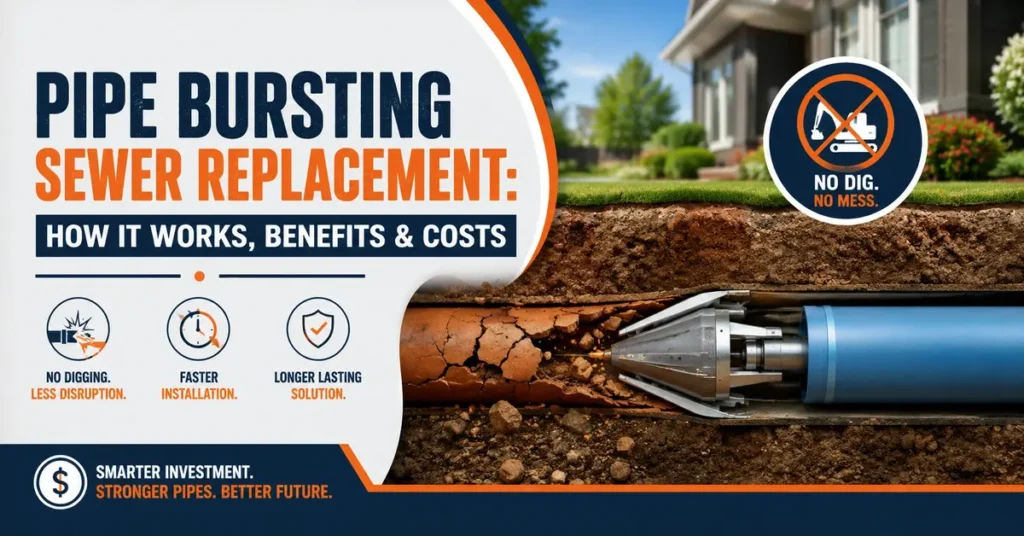
Trenchless sewer repair covers methods that replace or restore pipes with little to no excavation. Pipe bursting sewer line replacement pulls a new pipe through the old one while a head simultaneously breaks the old pipe outward into the surrounding soil. The result is a brand new sewer line with only small access holes at each end rather than a trench dug across the entire yard.
Traditional Excavation
When a pipe has collapsed or is too damaged for trenchless methods, excavation is the only real option. The ground above the damaged section gets opened, the old pipe comes out, and the new pipe goes in. It is more disruptive than trenchless repair but handles damage levels that no other method can address properly.
Repair vs Replacement: Knowing the Difference
The sewer system needs repair because it has a localized problem existing in one section of the pipe, which remains intact except for two specific areas of damage. The pipe requires repair through either sewer pipe lining or spot excavation, which will fix that specific section while leaving the remaining line undisturbed.
Replacement becomes the right call when damage spreads across a long run, when the pipe material has reached the end of its life, or when the same line has needed repeated repairs without lasting results. Putting money into a pipe that is failing systemically rarely makes sense past a certain point.
Preventing Future Sewer Problems
Grease going down kitchen drains is one of the most preventable sources of pipe damage. Pouring it into a container and throwing it away instead costs nothing and eliminates one of the most consistent contributors to sewer line buildup. Keeping non-flushable wipes and materials out of toilets prevents the accumulation that combines with grease and debris over time.
Scheduling a sewer camera inspection every few years gives real information about pipe condition before anything fails. Hydro jetting every 18 to 24 months keeps Raleigh’s mineral buildup and root growth from reaching a level that damages the pipe or causes a backup.
When Immediate Professional Help Is Needed
Sewage backing up into the home through any fixture is a health issue and needs same-day emergency service. A sewage odor throughout the house, not just near one drain, means the pipe has failed enough to release gas into the living space. Wet areas actively surfacing in the yard over the sewer line path mean the pipe is contaminating the surrounding soil right now. None of these situations improves on its own.
For Raleigh homeowners dealing with any of these urgent signs, sewer line repair Raleigh service is available same day across Raleigh-Dade County.
Frequently Asked Questions
Most targeted repairs wrap up in a single day. Hydro jetting and pipe lining are same-day services for most residential situations. Full excavation and pipe replacement typically takes one to three days depending on how long the damaged section runs and what the site conditions look like.
Not always. Trenchless methods need the pipe to still hold its basic shape. A section that has fully collapsed or lost its form requires excavation because the pipe no longer provides the structure that trenchless techniques rely on to work correctly.
A properly installed liner typically lasts 40 to 50 years. The smooth interior surface actually resists buildup better than the original pipe material did, which means maintenance intervals stretch further after lining than they did before.
The cost varies depending on the severity of the damage, sewer line location, and repair method chosen. Simple clogs are far less expensive than full pipe replacements, and lines under driveways or concrete cost more to access.
Final Thoughts
Sewer line problems grow underground in silence. By the time they make themselves obvious, sewer repair is already more expensive than it needed to be. Raleigh homeowners deal with hard water, aggressive roots, aging pipes, and shifting soil, conditions that push those problems forward faster than in most other cities.
The homeowners who pay the least over time are not necessarily the ones who react the fastest when something fails. They are the ones who inspect regularly, maintain on a schedule, and catch problems early enough that a camera inspection and a hydro jetting session are all the situation ever needs.