Back in the day, your only real choice for fixing a busted sewer line was to dig up the whole yard. A crew would roll in, mark out where the pipe ran, and spend the next several days carving out a massive trench from your front door all the way to the street.
Trenchless sewer repair changed that completely. The technology allows plumbers to fix or fully replace a damaged sewer drain pipe from the inside, with little to no digging at all. Two small access holes replace a trench that used to run the entire length of the property.
Raleigh homeowners find themselves dealing with sewer line headaches way more often than they’d care to admit. Getting a handle on your trenchless repair options, seeing how the tech actually works, and knowing the price tag ahead of time makes a huge difference when a pipe suddenly fails, and you need to make a quick, smart decision.
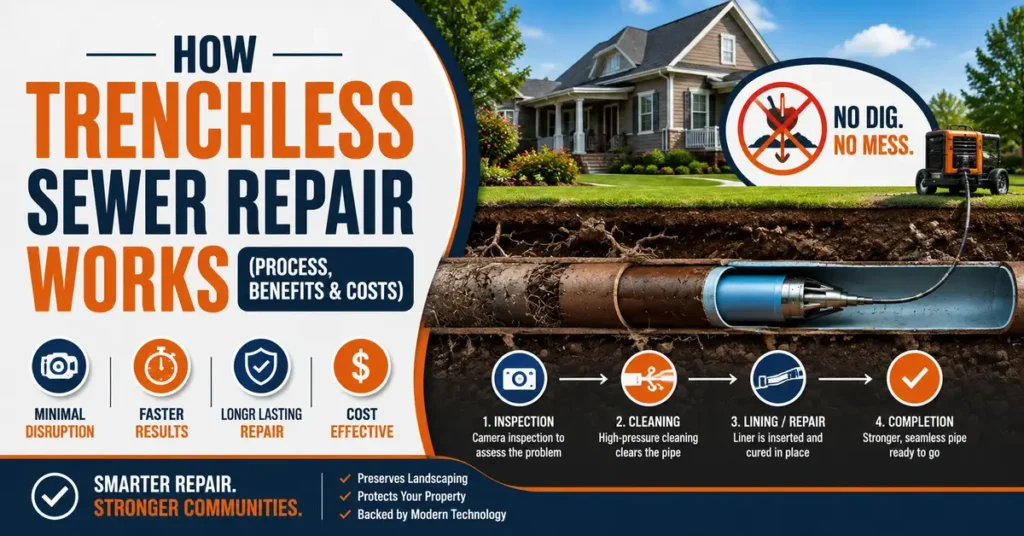
How the Trenchless Sewer Repair Process Works
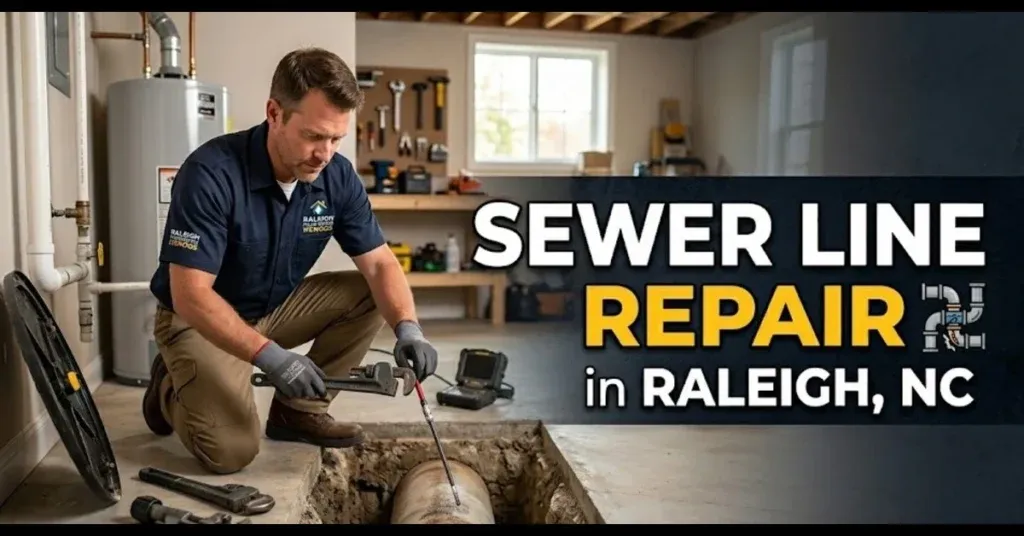
Every trenchless sewer repair job starts with a camera inspection. A waterproof camera gets fed into the sewer line through a cleanout access point. The plumber monitors live video feed through a screen while he records all internal pipe problems together with their respective pipe issues, which include cracks, root intrusion, joint separation, corrosion, and collapsed sections.
That inspection determines whether trenchless methods are suitable for the specific damage found. It also identifies the exact underground location of every problem area so the repair targets the right spots precisely. Nothing moves forward without this step.
Once the inspection proves trenchless is the right call, the plumber tracks down two access spots, typically one at either end of the bad stretch. From there, the actual game plan changes based on which trenchless approach is the best fit for whatever kind of shape the pipe is in.
After the repair is completed, the camera goes back into the line for a final check. The plumber documents the finished result and confirms the pipe is fully restored before the job closes.
Common Types of Trenchless Sewer Repair
Sewer Pipe Lining
Sewer pipe lining, which is known as cured-in-place pipe lining, provides a solution to damaged pipes by enabling repairs to be performed through their internal structure without any need to remove existing piping. The sewer line gets repaired through the installation of a flexible liner. The resin cures and hardens into a smooth, seamless new surface inside the existing pipe. The old damaged pipe functions as the outer shell while the new liner handles all upcoming flow through the system.Pipe lining is a great go-to for pipes struggling with cracks, rust, tiny joint leaks, or pesky root growth. The big thing is that the original pipe has to still be somewhat round, otherwise the new liner won't be able to press tight against those inner walls while it hardens into place.
Pipe Bursting Sewer Line Replacement
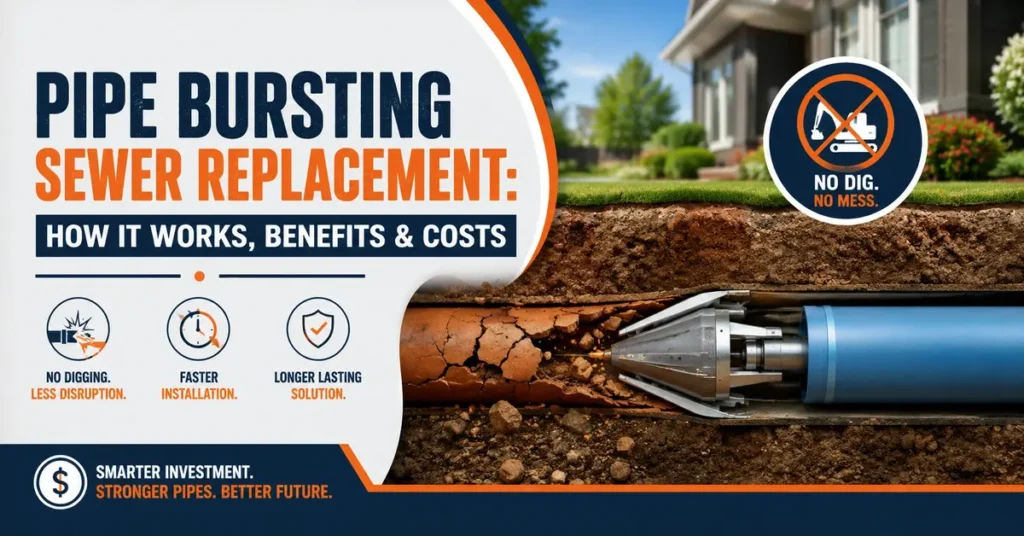
Pipe bursting sewer line replacement fully replaces the old damaged pipe rather than lining it. A bursting head gets pulled through the existing pipe by a cable attached to new pipe sections on the other end. As the bursting head moves through the line, it fractures the old pipe outward into the surrounding soil. The new pipe gets pulled into position simultaneously behind it. The result is a brand new sewer line, typically made of HDPE, which is a highly durable plastic, installed in the same path as the old one. The construction crew will create two small access points through the yard instead of building a complete trench. The method of pipe bursting enables the repair of damaged pipes that exceed lining repairs when their installation route remains intact for the bursting head to proceed.
Key Benefits of Trenchless Sewer Repair
Trenchless sewer repair delivers advantages that traditional excavation simply cannot offer:
- Minimal digging disrupts your yard.
- Most jobs finish in two days.
- Overall costs stay much lower.
- Results last up to fifty years.
- Pipe interior gets stronger after repair.
- Landscaping and driveways stay untouched.
- Sewer service is restored the same day.
When Trenchless Repair Is the Right Option
Trenchless sewer repair suits a wide range of common sewer pipe repair situations. A pipe with consistent cracking along a long section responds well to lining because the liner seals every crack in a single pass. Root intrusion that has damaged joints along multiple points gets addressed the same way. A pipe that has corroded significantly but still holds its basic shape is a strong candidate for lining.
Pipe bursting fits situations where the damage is too severe for lining, heavily deteriorated pipe, pipes that have cracked into multiple pieces along a run, or cast iron that has corroded past the point where a liner can bond to the interior surface. The most effective sewer line pathing solution for homeowners with landscaping and hardscaping, and structural elements over their sewer lines is trenchless methods. The need to protect a driveway, pool deck, or established landscaping from excavation damage serves as the main reason why people select trenchless repair methods instead of traditional repair techniques, which would still function.
Situations Where Trenchless Repair May Not Work
Trenchless methods have real limitations. A pipe that has fully collapsed loses the shape that both lining and pipe bursting depend on. A liner cannot press against a wall that is not there. A bursting head cannot travel through a section of pipe that has caved in on itself.
Severe belly sections, spots where the pipe has sagged significantly and collects standing water, do not get corrected by trenchless repair. The new liner or replacement pipe follows the same sunken path the old pipe took. Fixing a belly requires excavation to regrade the pipe slope properly.
Multiple access issues along the pipe run can also make trenchless methods impractical. When the pipe changes direction sharply or passes through areas with obstacles underground, the equipment sometimes cannot navigate the path cleanly. A thorough camera inspection identifies these situations before any commitment to a repair method is made.
What Affects Trenchless Sewer Repair Costs
Sewer backup repair cost and trenchless repair pricing both vary based on several factors. Pipe length is the biggest driver; a longer run requires more liner material or more new pipe, and the equipment operates longer. Pipe diameter affects material costs and the size of equipment needed for the job.
Site accessibility affects labor time on every job. A cleanout that is easy to reach and work from costs less than one buried under a structure or located in a tight space. Getting the right permits in Raleigh-Dade adds a bit to the final bill whenever you’re messing with the city sewer main, but a licensed plumber usually takes care of all that paperwork for you as part of the whole job.
Trenchless Repair vs Traditional Excavation
Traditional excavation opens the ground above the entire damaged pipe section. The old pipe comes out, and the new pipe goes in. It handles damage levels that trenchless methods cannot, such as collapsed sections, severe bellies, and pipes that have shifted entirely out of alignment.
Trenchless sewer repair handles the majority of common sewer pipe damage situations without opening the ground. The upfront material cost runs higher, but the total project cost, including excavation, concrete cutting, landscape restoration, and the time the property is disrupted, often favors trenchless when those additional costs get calculated honestly.
The decision between the two comes down entirely to what the camera finds inside the pipe. Damage that suits trenchless methods gets handled that way. Damage that requires excavation gets handled the traditional way. A plumber who pushes one method without inspecting the pipe first is not giving an honest recommendation.
How to Prepare for a Trenchless Sewer Repair Project
Preparation makes the actual repair day run smoothly. Clearing the area around the cleanout access point gives the crew room to set up equipment without working around obstacles. Moving vehicles out of the driveway helps if the sewer line runs under it.
Water use in the home needs to stop for the duration of the repair. The sewer line cannot have flow moving through it while the liner cures or the bursting head travels through. Our plumbers in Raleigh provide information about the duration of the shutdown period, which is needed to operate the equipment system. The family relies on these details to plan out their day.
As soon as the inspection proves trenchless is the way to go, the plumber finds two access spots at both ends of the section needing repair. From that point, the actual steps vary depending on which trenchless fix makes the most sense for the pipe’s condition.
Frequently Asked Questions
Most residential trenchless jobs finish in one to two days. Pipe lining on a standard residential run typically completes in a single day. Pipe bursting on longer or more complex runs may take two days. Both are significantly faster than traditional excavation, which runs three to five days for most jobs.
A well-installed liner is easily going to last you 40 to 50 years. That slick epoxy finish on the inside actually holds up against gunk and rust way better than the original pipe ever did in most situations.
It works on most common pipe materials, such as cast iron, clay, PVC, and concrete. The pipe condition matters more than the material.
HDPE pipe used in pipe bursting sewer line replacement is more flexible, more corrosion-resistant, and smoother on the interior than cast iron or clay. It handles ground movement better without cracking and resists root intrusion at joints more effectively than the older pipe materials it replaces.
Pipe lining basically renovates your current pipe by adding a brand-new inner coating, leaving the original structure where it is. Pipe bursting is a total replacement where the old line is broken apart as a fresh pipe is pulled through the middle. Lining works best for pipes that are damaged but still solid. Bursting is the way to go for those lines that are simply too far gone to be saved with a new liner.
Final Thoughts
Trenchless sewer repair fixes the biggest headache homeowners used to deal with when a line went bad: the absolute mess of the repair itself. This tech has come so far that most standard sewer issues can now be knocked out without tearing up your lawn, cutting through the driveway, or leaving you without working bathrooms for days on end.
For folks in Raleigh struggling with old pipes, invasive roots, or cracks, there are now solutions that simply weren’t around back in the day. It all starts with getting a real-deal camera inspection from a pro who actually looks at the pipe’s health before suggesting a fix. Every pipe is different. The best way to move forward depends entirely on what’s actually happening inside the line, rather than some one-size-fits-all sales pitch.